Rebuilding Identity After an Abusive Relationship
One of the most profound effects of an abusive relationship is the gradual erosion of identity.
Many women describe feeling as though they lost themselves during the relationship. Over time, decisions may have been controlled, emotions dismissed, and personal boundaries repeatedly violated.
After leaving the relationship, survivors often ask:
Who am I now?
What do I want for my life?
How do I trust myself again?
These questions are a natural part of the healing process.
Leaving an abusive relationship is an important step. Yet many women discover that the deeper work involves rediscovering their voice, rebuilding self-trust, and reconnecting with the parts of themselves that may have been silenced or diminished.
My work focuses specifically on supporting women through this stage of recovery.
Through therapy guided by the Identity Reclamation Framework, we explore the psychological journey from surviving abuse to rebuilding identity and creating a life aligned with your values and aspirations.
This process often includes:
• rebuilding trust in your own perceptions and decisions
• strengthening personal boundaries
• reconnecting with your values and sense of purpose
• rediscovering confidence in your voice and choices
• developing a clearer vision for your future
Recovery from abuse is not only about leaving the past behind. It is about reclaiming your identity and stepping forward into a life that reflects your strength, voice, and aspirations.
Identity Reclamation Framework
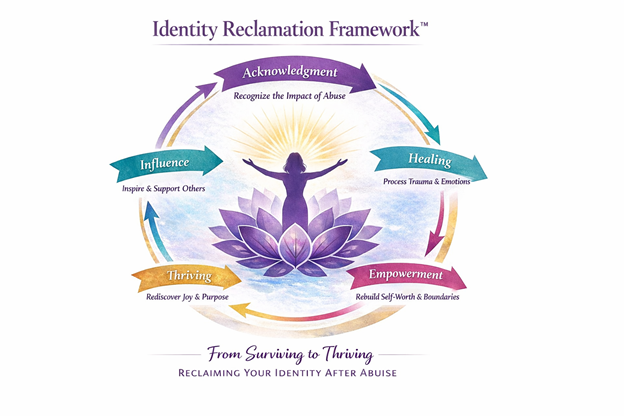
The Identity Reclamation Framework describes the psychological journey many women experience after leaving abusive relationships.
While much attention is often placed on surviving abuse, less focus has been given to the process of rebuilding identity and thriving afterward.
The Identity Reclamation Framework was developed to better understand and support this transformation.
The framework describes a progression that many women experience as they move from survival toward empowerment and thriving.
The stages include:
Acknowledgment and Acceptance
Recognizing the impact of the relationship and beginning the process of healing.
Healing and Recovery
Addressing the emotional and psychological effects of abuse and stabilizing the nervous system.
Empowerment and Growth
Rebuilding confidence, strengthening personal boundaries, and reconnecting with personal values.
Transitioning to Thriving
Developing clarity about life direction, goals, and identity beyond the experience of abuse.
Sustaining and Flourishing
Creating a life that reflects one’s authentic self, values, and aspirations.
Therapy guided by this framework supports women not only in recovering from abuse, but also in rediscovering who they are and what they want their future to look like.
The goal of this work is not simply survival, but reclaiming identity and building a life of strength, clarity, and purpose.